Hydration and Mental Clarity: How Water Intake Affects Cognitive Test Scores
Get the short answer first, then use the benchmarks, examples, and BrainRivals practice links to turn the idea into a measurable result.
Quick Answer
This guide turns an abstract idea about mental performance into something you can notice, measure, and improve. The fastest way to use it is to read the benchmark first, compare it with your own context, then run a related BrainRivals test under the same conditions for a cleaner before-and-after signal.
Key takeaways
- Start with the practical benchmark, not the trivia.
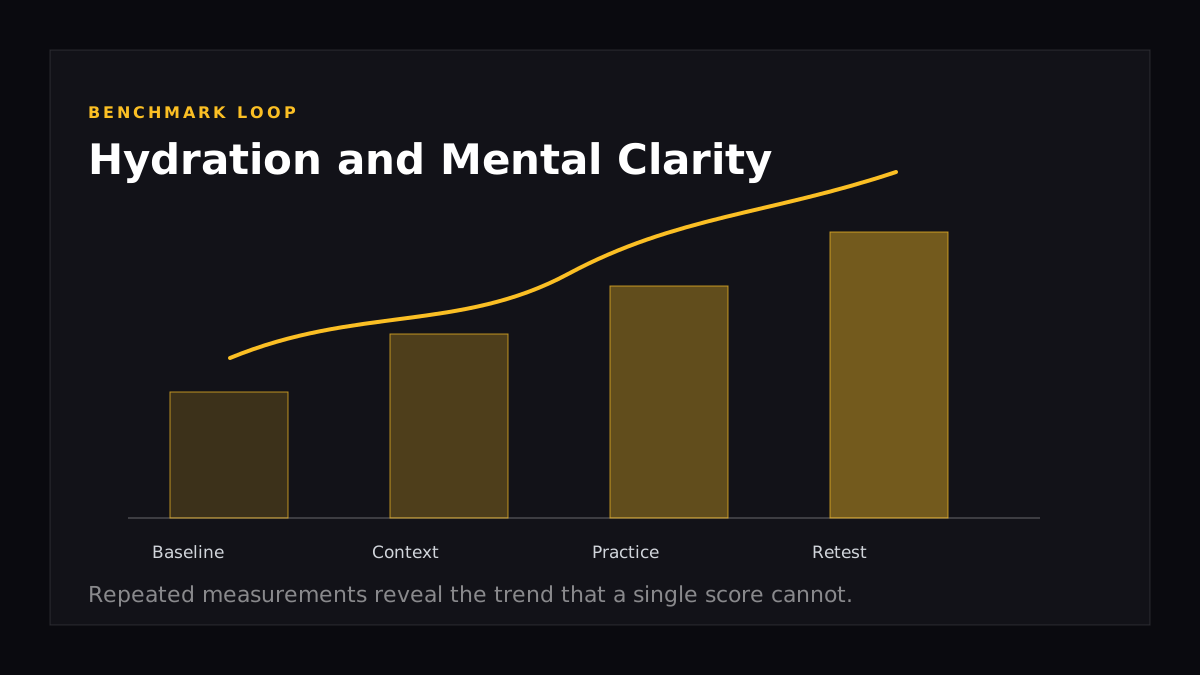
- Treat one score as a snapshot and repeated scores as the real signal.
- Use the Reaction Time as the next measurable step.
How to Use This Guide
Use the article in three passes: scan the quick answer, check the tables or examples that match your situation, then pick one action to test this week. That keeps the article useful even if you only have a few minutes, while still giving you enough detail to come back for deeper context.
Hydration is the most underrated cognitive lever. People obsess over nootropics, sleep schedules, and workout protocols while ignoring the fact that losing 2% of your body weight in water measurably destroys your reaction time and working memory.
The evidence is robust. The solution is simple. Yet nobody does it.
The Neuroscience of Dehydration
Your brain is 75% water. It's the most water-rich organ in your body. When you're dehydrated, your blood osmolality increases (higher salt concentration), which triggers water to leave your brain cells to balance osmotic pressure. This affects cerebral blood flow, glucose delivery, and neurotransmitter synthesis.
The result: your brain literally shrinks slightly, and it can't perform.
Studies show cognitive decline begins around 1-2% body weight loss from dehydration. By 3%, you're experiencing significant deficits. Most people spend 4-8 hours daily in a dehydrated state and don't realize it.
Dehydration Level vs. Cognitive Impact
| Body Weight Loss | Dehydration Stage | Reaction Time | Working Memory | Other Effects |
|---|---|---|---|---|
| 0-1% | Mild/Unnoticeable | No decline | No decline | May feel slightly sluggish |
| 1-2% | Threshold | +10-15ms slower | 5-8% accuracy drop | Thirst begins |
| 2-3% | Moderate | +20-30ms slower | 10-15% accuracy drop | Fatigue, dry mouth |
| 3-5% | Significant | +40-50ms slower | 20-25% accuracy drop | Dizziness, severe fatigue |
| 5%+ | Dangerous | Severe impairment | Major deficits | Heat exhaustion risk |
What does this mean practically? If your baseline reaction time is 250ms, a 2% dehydration loss pushes you to 265-275ms. That's measurable. That's real.
And most people operating at 1-2% dehydration don't even know they're thirsty yet.
Why You're Probably Dehydrated Right Now
The sensation of thirst is a lagging indicator. By the time you feel thirsty, you're already 1-2% dehydrated. And if you're caffeinated (diuretic), working hard, or in a warm environment, you can drift into 2-3% dehydration without noticing.
Add this to typical office work: you're sitting under fluorescent lights, breathing dry air, possibly caffeinated, focused on screens (reduced blink rate decreases perception of thirst). Dehydration compounds throughout the day.
Then you take a cognitive test and wonder why your scores are off.
Water vs. Electrolytes: The Real Distinction
Here's where it gets nuanced. Plain water is fine for most scenarios. But electrolytes (sodium, potassium, magnesium) matter when:
- You're exercising or sweating heavily. Sweat depletes electrolytes, not just water. Replacing with plain water dilutes your sodium levels further, worsening cellular hydration.
- You're in a fasted state. Without food intake, your electrolyte reserve is lower.
- You're dehydrated for extended periods. Plain water alone can take longer to restore optimal hydration.
For typical office-based cognitive work, plain water is sufficient. But if you're training hard (gym, sports) before taking a test, adding electrolytes accelerates rehydration.
Practical guideline:
- General hydration: Water only. Simple.
- Pre/post-workout hydration: Add electrolytes (sodium especially). A pinch of salt in your water or a sports drink works.
- Testing protocol: If you exercised earlier, use electrolyte-enhanced water for 2-3 hours before testing.
The Optimal Hydration Protocol for Cognitive Testing
If you're serious about baseline cognitive performance, here's a protocol:
Daily Baseline Hydration
- Start: 500ml water within 30 minutes of waking
- Throughout day: 200-250ml every 60-90 minutes (roughly 2.5-3 liters daily for most adults)
- Monitoring: Your urine should be pale yellow. Dark urine = you're behind.
- Avoid: Excessive water intake (>4 liters daily in sedentary person) can cause hyponatremia. Hydration should feel easy, not forced.
Pre-Test Protocol (2 hours before)
- Drink 500ml water 120 minutes before the test
- Drink 250ml water 30 minutes before
- Stop drinking 15 minutes before test starts (you don't want bathroom breaks during)
Why this timing? The 500ml at 120 minutes gives your kidneys time to process and stabilize hydration without creating a diuretic surge. The 250ml at 30 minutes tops off your system without excessive fluid in your bladder.
During Intense Testing (if multi-hour session)
- 250ml every 45 minutes of testing
- Add electrolytes if testing > 90 minutes
The Measurement
Here's how to verify this actually works:
Baseline test: Take a reaction time or memory test in your normal (probably slightly dehydrated) state. Record your scores.
Hydrated test: Follow the protocol above for 3-5 days (let your system adapt), then take the same test. Track improvement.
Most people see 5-15% improvement in reaction time and working memory from simply being properly hydrated. It's not glamorous, but it's real.
Common Hydration Mistakes
"I'll just drink a ton of water right before the test." Doesn't work. You need sustained hydration, and a water bolus will just send you to the bathroom.
"Sports drinks are better than water." For testing? No. They're useful during/after exercise, but for pure cognitive performance, plain water is cheaper and equally effective.
"I'm not thirsty, so I'm fine." You're almost certainly slightly dehydrated. Thirst is a lagging indicator.
"Coffee counts as hydration." Sort of. Caffeine is a mild diuretic, so a cup of coffee has a net hydration effect of maybe 80% of its volume. It's not ideal as your primary hydration source.
The Bottom Line
Dehydration is invisible, measurable, and fixable. It's the lowest-hanging fruit in cognitive optimization. You don't need pills, protocols, or expensive interventions. You need water.
If you're optimizing for cognitive test performance, hydration should be your baseline assumption, not an afterthought. It's non-negotiable.
Test Your Hydration Impact
Take the BrainRivals Reaction Time and Number Memory tests under two conditions: your normal hydration state, and after following the pre-test hydration protocol above. The difference might surprise you.
Track the data. Hydration is the one variable you can control completely and measure immediately.
Try It on BrainRivals
Reading about the concept is useful, but a repeatable score is more actionable. Run the Reaction Time and Number Memory tests, save your result, then repeat under similar conditions later. The trend matters more than a single best attempt.