Flow State and Cognitive Performance: How to Get Into the Zone Reliably
Get the short answer first, then use the benchmarks, examples, and BrainRivals practice links to turn the idea into a measurable result.
Quick Answer
This guide turns an abstract idea about focus into something you can notice, measure, and improve. The fastest way to use it is to read the benchmark first, compare it with your own context, then run a related BrainRivals test under the same conditions for a cleaner before-and-after signal.
Key takeaways
- Start with the practical benchmark, not the trivia.
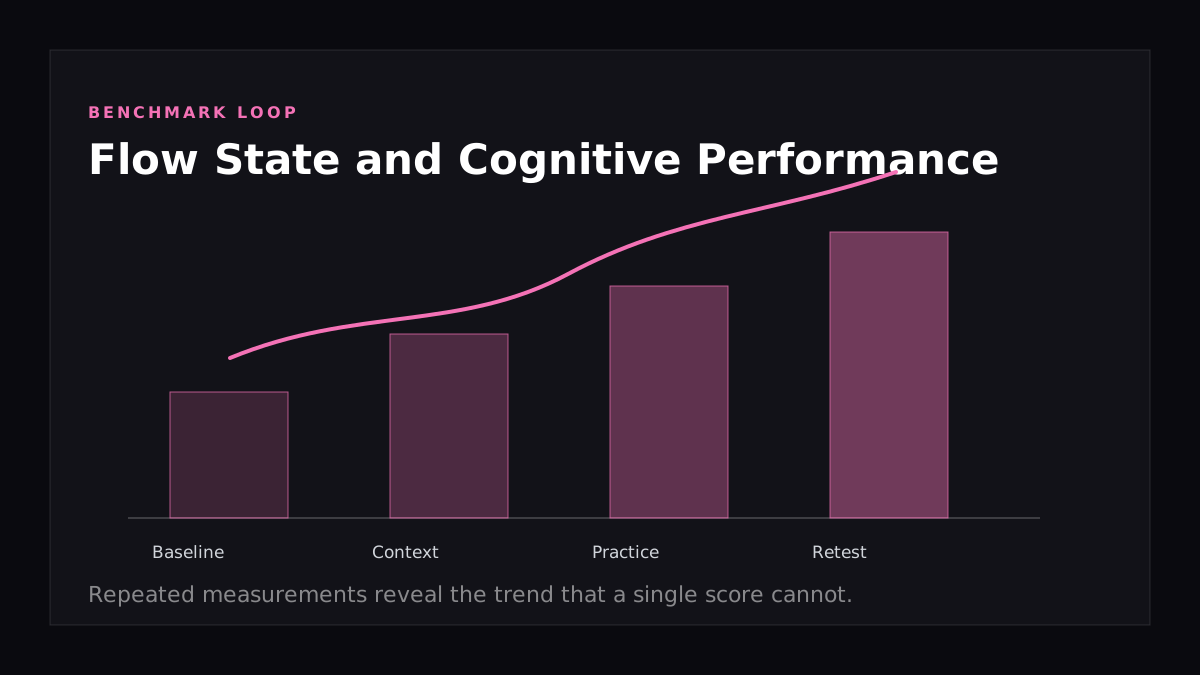
- Treat one score as a snapshot and repeated scores as the real signal.
- Use the Reaction Time as the next measurable step.
How to Use This Guide
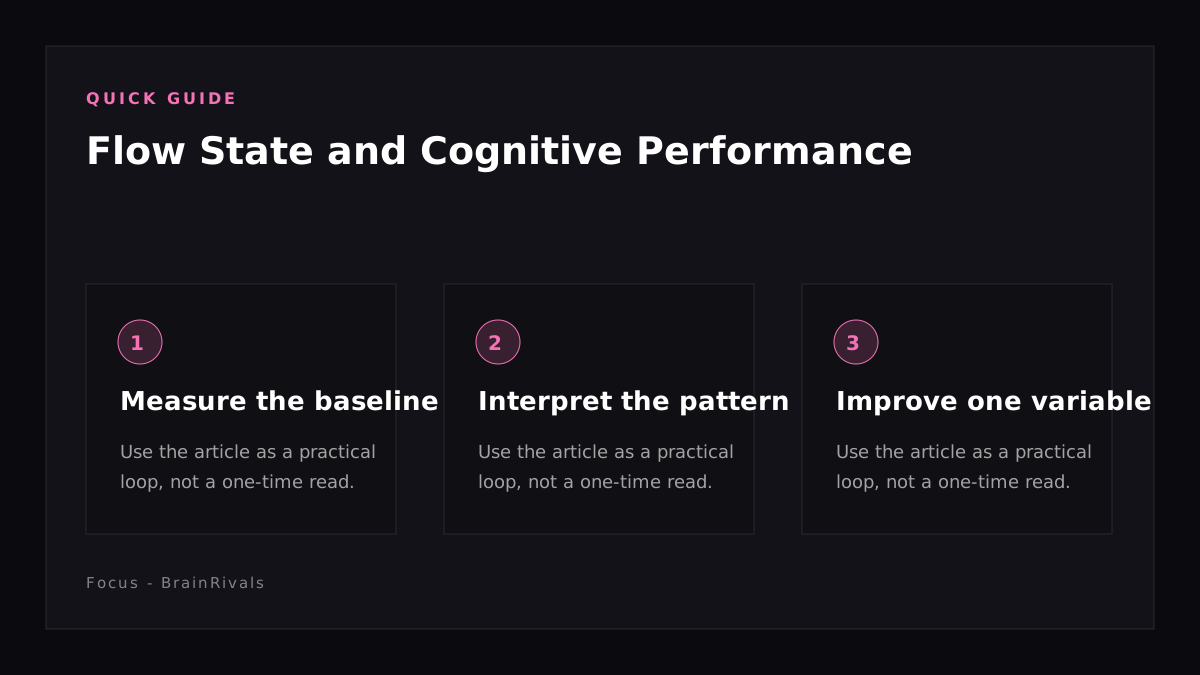
Use the article in three passes: scan the quick answer, check the tables or examples that match your situation, then pick one action to test this week. That keeps the article useful even if you only have a few minutes, while still giving you enough detail to come back for deeper context.
What Flow State Actually Is
Flow is the state where attention is fully absorbed in a task, the sense of self quiets, action and awareness merge, and performance peaks. Mihaly Csikszentmihalyi formalized the concept in the 1970s after studying chess masters, surgeons, climbers, and artists who all described the same experience.
It's not a vague feeling. Flow has a specific neurological signature:
- Transient hypofrontality — temporary reduction of prefrontal cortex activity, including the regions that produce self-criticism and time tracking
- A neurochemical cocktail of dopamine, norepinephrine, endorphins, anandamide, and serotonin
- A shift from beta-wave brain activity (active thinking) to the borderline of alpha and theta (relaxed awareness)
The performance gains are real and measurable. Athletes in flow show 30–50% improvements in skill execution. Programmers in flow produce 5x more code. Reaction tasks performed in flow show 15–25ms improvements over baseline.
The Three Conditions for Flow
Decades of research narrow flow's triggers down to three non-negotiables:
1. Skill–challenge balance
The task must be slightly harder than your current skill level. Roughly 4% above your comfort zone, according to Steven Kotler's research synthesis. Below that, boredom kills focus. Above that, anxiety blocks immersion.
This is why flow is fragile. The same task that produced flow last week may now be too easy. The challenge must keep moving.
2. Clear, immediate feedback
You need to know moment-to-moment whether you're succeeding. Flow rarely emerges in tasks where the feedback is delayed by hours or days.
This is why action sports, video games, music, and timed tests produce flow more reliably than long-form planning or strategic work — the feedback loop is tight enough for the brain to lock on.
3. Clear, specific goals
Vague goals scatter attention. Flow requires the brain to know exactly what success looks like for the next 5–60 seconds. "Beat my reaction time best" produces flow. "Be more productive" doesn't.
Why Cognitive Tests Are Effective Flow Triggers
Most BrainRivals tests hit all three conditions naturally:
- Skill–challenge balance: Each new attempt is calibrated against your own past performance, so the difficulty floor moves with you.
- Immediate feedback: Reaction times appear in milliseconds, sequence levels advance in real time.
- Clear goals: Beat the previous best. Reach the next tier.
This is why people often find themselves in genuine flow during a long session on the BrainRivals Aim Trainer or Reaction Time Test — the structure makes flow easy to fall into.
The Four Phases of Flow
Flow isn't a switch. It's a cycle with predictable phases:
Phase 1: Struggle
The hardest part. You're loading the task into working memory, fighting distractions, and frustrated by the gap between your current performance and the target. Most people quit here.
Duration: typically 5–20 minutes for cognitive tasks.
Phase 2: Release
You stop forcing it. Often coincides with a momentary distraction (standing up, drinking water, glancing away). The release is what allows the prefrontal cortex to quiet down.
This is where many people sabotage themselves: they assume the struggle phase isn't working and switch tasks, never reaching release.
Phase 3: Flow
The state itself. Time distorts (usually feels faster), self-talk quiets, performance is automatic, and attention is held effortlessly. Can last from minutes to hours depending on the task and the person.
Phase 4: Recovery
Cognitive depletion that follows. Flow is metabolically expensive — the neurochemical cascade can't sustain indefinitely. Recovery involves sleep, food, and the kind of mental rest that doesn't introduce new cognitive demands.
Skipping recovery accumulates fatigue and makes the next flow session harder to enter.
How to Enter Flow Reliably
Engineer the trigger conditions
- Match challenge to skill: Pick tasks at the edge of your ability. On BrainRivals, this often means targeting your next tier rather than a generic "do better."
- Create unambiguous feedback: Use tests that report scores in real time. Avoid open-ended training where you can't tell if you're improving.
- Define a specific goal for the session: "30 minutes on reaction time, target sub-200ms average" beats "do some brain training."
Eliminate distraction
Flow requires uninterrupted attention. Every notification is a flow killer because each interruption drops you back to phase 1.
- Phone in another room (not face-down — actually unreachable)
- Single-tab browser, full-screen
- Headphones with non-distracting audio (instrumental, brown noise, or silence)
- Schedule a 30-minute window where you cannot be reached
Build pre-task rituals
The brain associates contextual cues with mental states. A consistent pre-flow ritual primes the state:
- Same physical location
- Same audio
- Same warm-up sequence (a few easy attempts before pushing)
- Same time of day, ideally after a peak-arousal trigger like coffee or exercise
The ritual itself doesn't matter as much as the consistency. After 2–3 weeks of repetition, the cues alone start triggering the state.
Respect recovery
Two flow sessions per day is the realistic ceiling for most people. More than that, and the quality of subsequent sessions drops sharply.
Recovery isn't passive — it requires:
- Adequate sleep (flow degrades fastest under sleep debt)
- Genuine downtime (not just a different cognitive task)
- Nutrition that doesn't crash blood sugar mid-session
- Movement, ideally outside
What Blocks Flow Most Often
| Block | Fix |
|---|---|
| Anxiety about performance | Lower the perceived stakes — flow needs play, not pressure |
| Self-monitoring | Externalize the goal so attention goes outward, not inward |
| Multitasking | Single task per flow session, no exceptions |
| Wrong difficulty | Adjust the task — too easy means slightly harder mode, too hard means lower difficulty |
| Caffeine overload | Optimal arousal is moderate, not maximum — too much caffeine produces anxious focus, not flow |
| Poor sleep | Flow becomes nearly inaccessible past 2 nights of sleep debt |
Flow vs. Deep Work vs. Concentration
These overlap but aren't identical:
- Concentration is the conscious effort to keep attention on a task. Effortful, finite, controllable.
- Deep work is sustained concentration on cognitively demanding work. Productive, but still effortful.
- Flow is concentration that has crossed the threshold into automatic, self-sustaining absorption. Effortless from inside, but only reachable through deep work.
You can produce excellent results in deep work without ever entering flow. Flow is the rarer, higher-performance ceiling on top of deep work.
Try It on BrainRivals
Reading about the concept is useful, but a repeatable score is more actionable. Run the Reaction Time, Aim Trainer and Typing Speed tests, save your result, then repeat under similar conditions later. The trend matters more than a single best attempt.
Frequently Asked Questions
How often can you enter flow?
For most people, daily flow is sustainable with proper recovery — usually 30–90 minutes per session, once or twice a day. Multiple long flow sessions per day work for some people but require careful sleep, nutrition, and a low-stress baseline.
Does flow improve with practice?
Yes. The trigger threshold gets lower with repeated practice. Beginners may need 25–40 minutes of struggle to enter flow; experienced practitioners often enter within 5–10 minutes of starting a known flow-trigger task.
Can you get into flow on cognitive tests?
Yes — fast-feedback cognitive tests are excellent flow triggers. The BrainRivals Aim Trainer, Typing Speed Test, and Sequence Memory Test all provide tight feedback loops, dynamic difficulty, and clear goals.
Is flow the same as "the zone" in sports?
Yes. "The zone" is athletes' colloquial term for flow. The neurological state is the same whether it's a tennis player in match point or a programmer solving a complex bug. The conditions that trigger it are the same.
Does meditation help with flow?
Indirectly, yes. Mindfulness meditation strengthens the attention systems that make flow accessible: it reduces baseline mind-wandering, improves the ability to redirect attention, and reduces the prefrontal noise that delays the release phase. Most experienced flow practitioners have some kind of attention training practice.
Can flow become addictive?
Mildly, in the same way exercise can. The neurochemical cocktail is genuinely rewarding, and people who reliably access flow can come to depend on it. The risk is using flow-pursuit to avoid lower-arousal but important tasks (administrative work, relationship maintenance, rest). Moderation matters here as everywhere.