Brain Fog: 7 Real Causes and What Actually Fixes It
Get the short answer first, then use the benchmarks, examples, and BrainRivals practice links to turn the idea into a measurable result.

Quick Answer
This guide turns an abstract idea about mental performance into something you can notice, measure, and improve. The fastest way to use it is to read the benchmark first, compare it with your own context, then run a related BrainRivals test under the same conditions for a cleaner before-and-after signal.
Key takeaways
- Start with the practical benchmark, not the trivia.
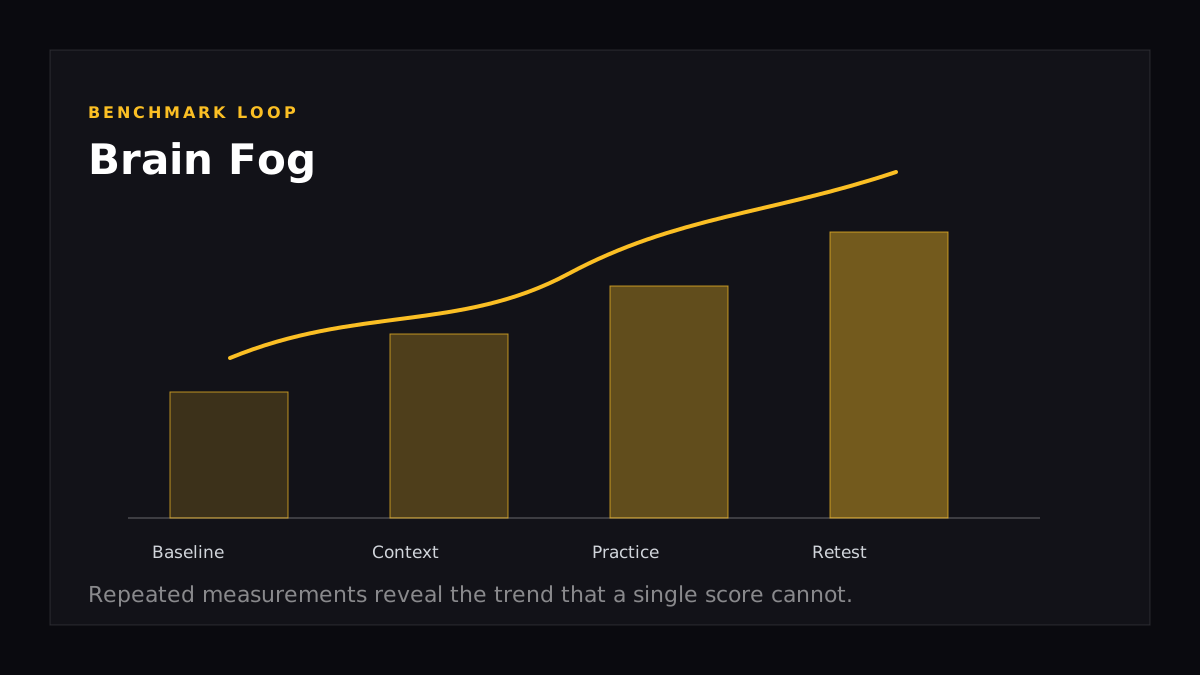
- Treat one score as a snapshot and repeated scores as the real signal.
- Use the Reaction Time as the next measurable step.

How to Use This Guide
Use the article in three passes: scan the quick answer, check the tables or examples that match your situation, then pick one action to test this week. That keeps the article useful even if you only have a few minutes, while still giving you enough detail to come back for deeper context.
What Brain Fog Actually Is
"Brain fog" is not a clinical diagnosis. It's a catch-all term for a cluster of symptoms — sluggish thinking, difficulty concentrating, word-finding problems, slow reaction times, and a vague sense that your mind is operating through gauze.
The frustrating part: it's almost always reversible once you identify the underlying cause. The challenge is that there are at least seven common causes, and they often combine.
If you suspect brain fog is affecting your cognitive performance, a baseline measurement helps. Try the BrainRivals Reaction Time Test and Number Memory Test on a clear-headed day, then again on a foggy day — the gap is often 20–40%.
Cause 1: Sleep Debt (Almost Always)
If you remember nothing else from this article, remember this: the single most common cause of brain fog is insufficient or low-quality sleep.
A single night of 6 hours instead of 8 reduces working memory capacity by roughly 15%, slows reaction time by 20–50ms, and impairs decision-making to a degree comparable with mild alcohol intoxication. Two consecutive nights compound these effects.
The fix:
- Aim for 7–9 hours per night, consistently
- Wake at the same time every day, weekends included
- Reduce blue-light exposure 60 minutes before bed
- Treat sleep apnea aggressively if you snore — it's a leading hidden cause of chronic brain fog
Cause 2: Dehydration
The brain is roughly 75% water, and even a 2% drop in body water reduces cognitive performance measurably. Most adults walk around chronically underhydrated, especially in winter when thirst signals weaken.
Symptoms of mild dehydration overlap perfectly with brain fog: slowed thinking, headaches, attention drift, irritability.
The fix:
- 2–3 liters of water per day for most adults; more if you exercise or live in a hot climate
- Front-load hydration in the morning — most people wake up dehydrated after 7+ hours without water
- Monitor urine color: pale straw is well-hydrated, dark yellow is mild dehydration
For more on the cognitive cost of being underhydrated, see Hydration and Mental Clarity.
Cause 3: Blood Sugar Volatility
Sharp blood sugar spikes and crashes — usually from refined-carb-heavy meals — produce a predictable cognitive dip. The brain is one of the most glucose-sensitive organs in the body.
The pattern: a high-carb meal → blood sugar spike → insulin overcorrection → reactive hypoglycemia → 30–90 minutes of brain fog, fatigue, and low motivation.
The fix:
- Build meals around protein, fiber, and healthy fats
- If you eat carbs, pair them with protein or fat to slow absorption
- Avoid liquid sugar (juice, sweetened coffee, soft drinks) — they spike fastest
- Watch out for "healthy" breakfasts that are mostly sugar (granola, flavored yogurt, oat milk)
Cause 4: Chronic Inflammation
Low-grade systemic inflammation impairs the brain through several pathways: cytokine signaling that interferes with neurotransmitter function, increased blood-brain barrier permeability, and disrupted glymphatic clearance during sleep.
Common inflammation drivers:
- Diet high in processed foods, seed oils, and refined sugar
- Sedentary lifestyle
- Untreated allergies and food sensitivities
- Chronic psychological stress
The fix:
- Mediterranean-style diet (vegetables, olive oil, fish, legumes, whole grains)
- Regular exercise, especially aerobic
- Test for and address food sensitivities if symptoms persist after diet cleanup
- Manage stress directly (see Cause 7)
Cause 5: Nutrient Deficiencies
Several nutrients are required in adequate amounts for clear cognition. Deficiencies are surprisingly common, even in well-fed populations:
| Nutrient | Cognitive role | Common deficiency rate |
|---|---|---|
| Vitamin B12 | Myelin synthesis, neurotransmitter production | 6% of adults under 60, 20%+ of adults over 60 |
| Vitamin D | Neuron function, mood regulation | 40%+ in northern latitudes |
| Iron | Oxygen delivery to brain, dopamine synthesis | 10%+ in menstruating women |
| Omega-3 (EPA/DHA) | Membrane fluidity, anti-inflammatory | Most adults below optimal |
| Magnesium | NMDA receptor function, sleep quality | 50%+ below RDA |
The fix:
- Get a blood panel if brain fog is persistent — bloodwork is cheap and definitive
- Address actual deficiencies with food first, supplementation second
- Don't blanket-supplement: fixing what's not broken does nothing
Cause 6: Medications and Supplements
Many medications produce subtle cognitive impairment as a side effect, often unmentioned in patient counseling:
- Antihistamines (especially diphenhydramine — found in many sleep aids)
- Benzodiazepines and "Z-drugs" for sleep
- Some blood pressure medications (beta-blockers, especially)
- Statins (effect is small but real for some people)
- High doses of melatonin
If brain fog appeared after starting a new medication, the medication is the prime suspect until proven otherwise. Talk to your doctor before changing anything.
Cause 7: Chronic Stress
Sustained psychological stress produces measurable cognitive impairment through cortisol's effect on the hippocampus and prefrontal cortex. Chronic stress literally shrinks the brain regions responsible for memory, focus, and decision-making.
The frustrating part: people under chronic stress often don't feel unusually stressed. The system adapts, then degrades.
The fix:
- Identify the actual stressor — vague "I'm stressed" doesn't help
- Reduce input load: fewer notifications, fewer meetings, fewer simultaneous priorities
- Build in genuine recovery: walks without your phone, weekends without work email, hobbies that aren't optimized
- Mindfulness meditation has solid evidence for reducing the cognitive cost of stress
For more on building cognitive recovery into your routine, see Habits to Improve Brain Speed.
A Diagnostic Sequence
If you have persistent brain fog, work through these in order — easiest fixes first:
- One week of consistent 8-hour sleep. Many cases resolve here.
- Audit hydration and meals. Add water, remove liquid sugar, build meals around protein.
- Three weeks of regular exercise. 150 minutes/week minimum.
- Bloodwork. B12, D, iron, ferritin, full thyroid panel, fasting glucose, HbA1c.
- Medication review with your doctor if anything started recently.
- Stress audit. What are the persistent inputs? What can be removed?
- See a doctor if all of the above are addressed and fog persists 4+ weeks. Possibilities include thyroid issues, sleep apnea, long COVID, autoimmune conditions, or undiagnosed depression.
When Brain Fog Is a Red Flag
Most brain fog is benign and reversible. But escalate to a doctor immediately if:
- It started suddenly without an obvious cause
- It's accompanied by severe headaches, vision changes, or weakness
- You have memory loss for recent events (forgetting what happened today, not where you left your keys)
- It's progressively worsening despite lifestyle interventions
Try It on BrainRivals
Reading about the concept is useful, but a repeatable score is more actionable. Run the Reaction Time, Number Memory and Verbal Memory tests, save your result, then repeat under similar conditions later. The trend matters more than a single best attempt.
Frequently Asked Questions
How long does brain fog last?
It depends on the cause. Sleep-related brain fog clears within 1–2 nights of recovery sleep. Diet-related fog clears in 1–2 weeks of consistent changes. Inflammation-driven fog can take 4–8 weeks to fully resolve. Stress-related fog improves quickly with stress reduction but can take months if the underlying stressor isn't addressed.
Can brain fog be permanent?
Almost never. Even severe brain fog from long COVID, chemotherapy, or extended sleep deprivation generally improves substantially with time and the right interventions. Persistent fog with no improvement after 2–3 months of clean lifestyle warrants medical investigation, but is rarely irreversible.
Does brain fog show up on cognitive tests?
Yes. Reaction time slows by 10–30%, working memory capacity drops, and verbal fluency declines. The BrainRivals Reaction Time Test and Number Memory Test will both show measurable degradation versus a baseline taken on a clear-headed day. This makes them useful for tracking recovery.
Is brain fog the same as ADHD?
No. ADHD is a chronic condition with a specific neurodevelopmental profile, and its attentional difficulties don't resolve with sleep or hydration. Brain fog is situational and clears once the underlying cause is fixed. That said, untreated ADHD can produce a fog-like experience, and some people discover ADHD only after eliminating the obvious causes.
Can supplements clear brain fog?
Only if you have a deficiency. The supplements most likely to help are the ones treating actual gaps — B12 if you're low, D if you're low, omega-3 if your diet has none. Generic "brain fog" supplements (most nootropic stacks, "focus" gummies) have weak evidence and rarely outperform fixing sleep, hydration, and diet.
Why do I get brain fog after eating?
Almost always blood sugar volatility or food sensitivity. Track which meals trigger it: refined-carb-heavy meals are the most common, followed by gluten and dairy in sensitive individuals. A simple test: eat a protein-and-vegetable meal for three days and see if afternoon fog disappears.