Brain Training for ADHD: Can Reaction and Focus Games Help?
Get the short answer first, then use the benchmarks, examples, and BrainRivals practice links to turn the idea into a measurable result.
Quick Answer
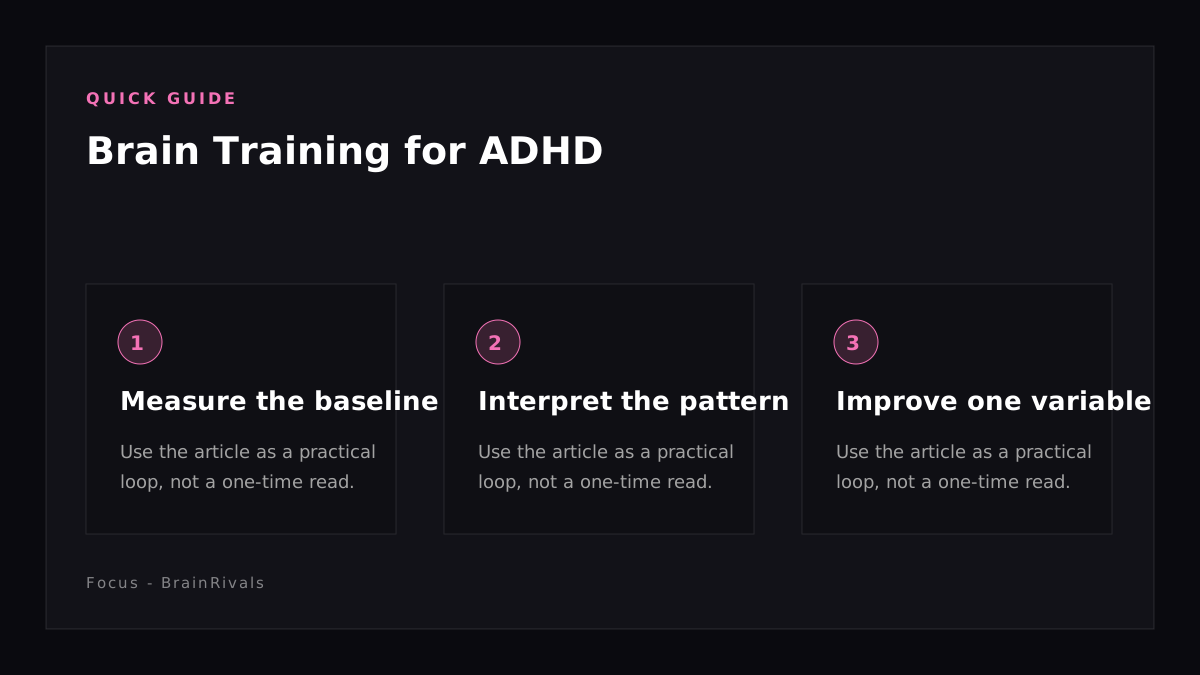
This guide turns an abstract idea about focus into something you can notice, measure, and improve. The fastest way to use it is to read the benchmark first, compare it with your own context, then run a related BrainRivals test under the same conditions for a cleaner before-and-after signal.
Key takeaways
- Start with the practical benchmark, not the trivia.
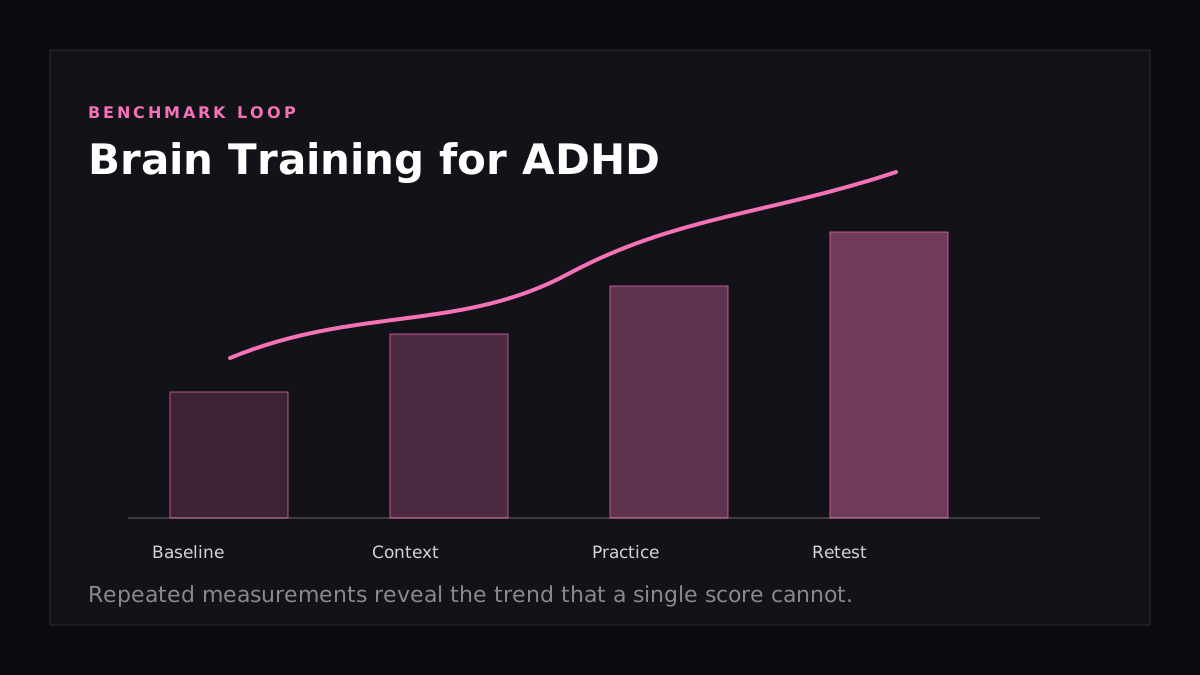
- Treat one score as a snapshot and repeated scores as the real signal.
- Use the Reaction Time as the next measurable step.
How to Use This Guide
Use the article in three passes: scan the quick answer, check the tables or examples that match your situation, then pick one action to test this week. That keeps the article useful even if you only have a few minutes, while still giving you enough detail to come back for deeper context.
ADHD isn't about willpower or discipline. It's neurobiology. And that matters because if you understand what's actually broken, you can understand what interventions might help—and which ones are snake oil.
The question people ask: Can brain training games improve attention in ADHD? The honest answer: Sometimes, a little, under specific conditions.
Let's dig into the science.
What ADHD Actually Is: Neurobiology, Not Defects of Character
ADHD involves two key brain dysfunction patterns:
1. Dopamine Dysregulation
ADHD brains have lower dopamine levels and fewer dopamine receptors in the prefrontal cortex. This impairs:
- Motivation – normal tasks feel unrewarding, so starting them is hard
- Sustained attention – maintaining focus on non-novelty tasks is exhausting
- Working memory – holding information in mind requires effort
- Executive function – planning and sequencing tasks is difficult
The dopamine connection explains why ADHD individuals hyperfocus on novel, interesting tasks (video games, special interests) but can't focus on tedious ones (homework, reports). The novel task provides dopamine stimulation; the boring task doesn't.
2. Prefrontal Cortex Underactivation
Brain imaging shows that ADHD individuals have lower activation in:
- Dorsolateral prefrontal cortex (executive function, planning, impulse control)
- Anterior cingulate cortex (attention regulation, error detection)
- Striatum (reward processing, motivation)
This underactivation worsens under boring or understimulating conditions.
The result: ADHD feels like "I can't focus" but neurologically it's "my brain isn't getting enough stimulation to activate properly."
What the Research Says About Cognitive Training for ADHD
The evidence is mixed and honest reviews acknowledge the hype-reality gap.
What Works (Partially)
Several studies show modest benefits from cognitive training in ADHD:
Working Memory Training: Meta-analyses show that intensive working memory training improves WM performance in ADHD participants—but only during the training period. Benefits are specific to the trained task and don't transfer broadly.
Study example: Participants who trained on n-back tasks improved on n-back performance but not on other WM tests or real-world attention.
Response Inhibition Training: Reaction time/impulse control training shows some benefit for impulsive responding. Tasks that require quick, accurate decision-making under time pressure appear to engage dopamine systems and improve performance.
Sustained Attention Games: Games requiring vigilance over time (like reaction time tests or visual tracking) show modest improvements in alertness and reaction time, likely through dopamine engagement.
What Doesn't Work (or Barely)
Far Transfer Doesn't Happen: This is the big one. Training a specific cognitive domain (e.g., working memory) doesn't improve other domains or real-world functioning significantly.
Study example: A comprehensive 2020 meta-analysis found that cognitive training for ADHD improved performance on trained tasks but showed "no significant improvement on clinical outcomes, grades, or standardized tests."
Effect Sizes Are Small: When improvements are found, they're often clinically modest. You might improve reaction time by 30-50ms, but not see transformation in daily attention or functioning.
Long-term Benefits Are Unclear: Most studies show that benefits fade once training stops or are small 3-6 months post-training.
Which Types of Games Help Most (And Why)
If you're considering brain training for ADHD, these modalities have the most support:
1. Reaction Time Tasks
- Why they help: Require dopamine activation (stimulating, time-pressured)
- Best for: Impulsive responding, alertness
- Realistic benefit: Improved speed and accuracy on similar tasks; modest carryover to general alertness
- Mechanism: Engaging prefrontal cortex through challenging, rewarding stimulation
2. Working Memory Games
- Why they help: Build the neural systems that handle information holding
- Best for: Holding sequences, remembering instructions
- Realistic benefit: Better performance on similar memory tests; unclear real-world transfer
- Mechanism: Repeated practice strengthens dorsolateral prefrontal cortex
3. Sequence/Pattern Games
- Why they help: Combine attention, memory, and rule-following
- Best for: Pattern recognition, procedural learning
- Realistic benefit: Improved pattern detection; modest focus improvement
- Mechanism: Engages multiple attention systems simultaneously
4. Games with Novelty + Reward
- Why they help: ADHD brains respond to novelty and reward
- Best for: Engagement and motivation
- Realistic benefit: Sustainable motivation to train (if the game stays interesting)
- Mechanism: Provides dopamine stimulation that compensates for baseline dopamine deficit
Realistic Expectations vs. Hype
The hype: "Train your brain, cure ADHD"
The reality: Brain training can provide modest improvements in trained abilities. It will not:
- Cure ADHD
- Replace medication when needed
- Dramatically improve real-world functioning
- Create wholesale changes to attention capacity
What brain training can do:
- Improve performance on similar trained tasks
- Provide dopamine engagement (making training itself rewarding)
- Build awareness of your attention patterns
- Serve as a supplement to (not replacement for) other treatments
- Offer proof that you can improve, which helps motivation
The Missing Piece: Novelty and Motivation
The reason many ADHD individuals abandon brain training: it becomes boring.
ADHD brains need novelty and reward to maintain dopamine engagement. After 10 sessions of the same game, the novelty fades and dopamine wanes. The game that felt stimulating becomes as tedious as homework.
This is why:
- Gamification helps (leaderboards, progress tracking, unlocks)
- Variety matters (rotating between different game types)
- Community/competition helps (comparing scores with others)
- Short, frequent sessions beat long ones (sustained novelty)
A Practical ADHD-Friendly Approach to Brain Training
If you're considering brain training as part of ADHD management:
-
Don't expect a cure. View it as a supplementary tool, not replacement for medication/therapy.
-
Focus on engagement over difficulty. Choose games that feel stimulating, not frustrating.
-
Rotate game types. One game gets boring; multiple types maintain novelty.
-
Keep sessions short. 5-10 minutes of focused training beats 30 minutes of reluctant slogging.
-
Pair with other interventions:
- Medication (when appropriate)
- Behavioral strategies (time blocks, external reminders, environmental design)
- Sleep, exercise, nutrition (foundational)
- Therapy/coaching
-
Track specific metrics. If you're training, measure what you're training (reaction time, memory span, etc.), not vague "focus."
-
Expect transfer to be limited. Training reaction time improves reaction time. It might improve alertness slightly. It won't automatically improve studying.
The Honest Bottom Line
Brain training for ADHD is neither snake oil nor miracle cure. The research shows:
- Real neurobiological effects from appropriate cognitive training
- Measurable improvements in trained domains
- Limited transfer to untrained domains or real-world functioning
- Modest but meaningful benefits for some individuals
- Greater benefits when combined with other interventions
It's a tool. Not a replacement for treatment, but a potentially useful supplement.
Interested in exploring this? Start with our Reaction Time test to establish your baseline, then progress to Sequence Memory for a comprehensive workout. Keep sessions short (5-10 minutes), rotate between test types, and track whether you notice improvements in real-world attention. Combined with proper treatment and lifestyle factors, brain training can be part of a comprehensive ADHD management strategy.
Try It on BrainRivals
Reading about the concept is useful, but a repeatable score is more actionable. Run the Reaction Time, Sequence Memory and Number Memory tests, save your result, then repeat under similar conditions later. The trend matters more than a single best attempt.