Nootropics for Brain Speed: What Actually Works for Cognitive Tests
Get the short answer first, then use the benchmarks, examples, and BrainRivals practice links to turn the idea into a measurable result.

Quick Answer
This guide turns an abstract idea about memory into something you can notice, measure, and improve. The fastest way to use it is to read the benchmark first, compare it with your own context, then run a related BrainRivals test under the same conditions for a cleaner before-and-after signal.
Key takeaways
- Start with the practical benchmark, not the trivia.
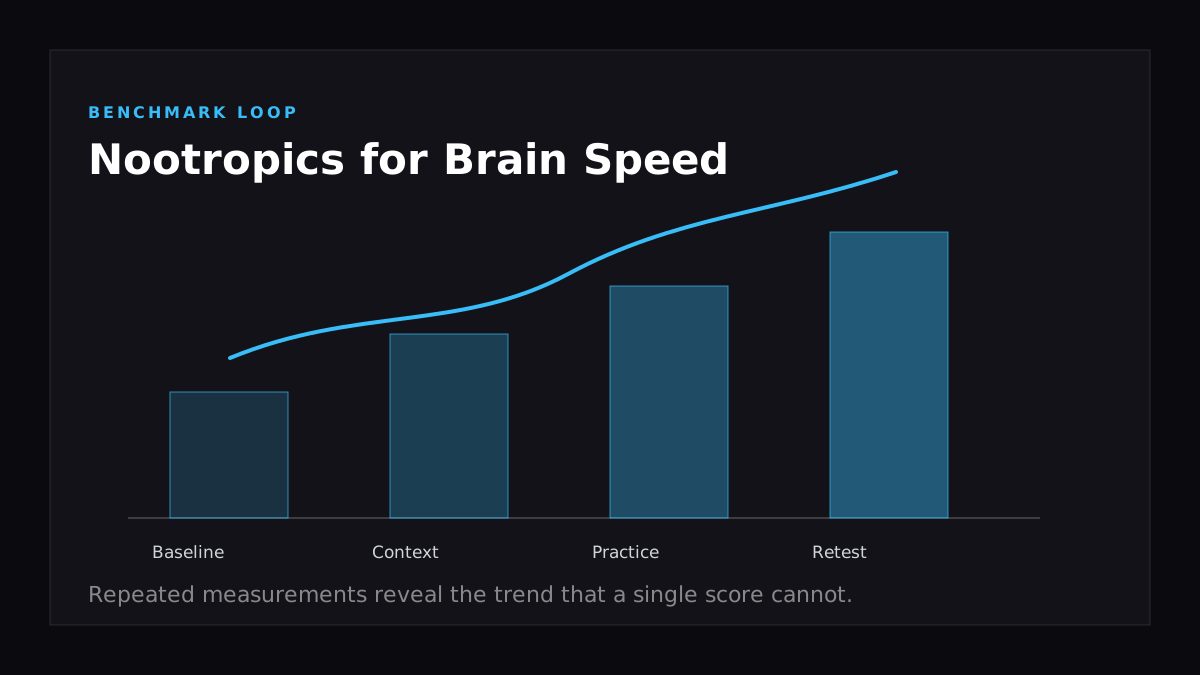
- Treat one score as a snapshot and repeated scores as the real signal.
- Use the Number Memory as the next measurable step.
How to Use This Guide
Use the article in three passes: scan the quick answer, check the tables or examples that match your situation, then pick one action to test this week. That keeps the article useful even if you only have a few minutes, while still giving you enough detail to come back for deeper context.
The nootropics market is a minefield of empty promises. Thousands of supplements claim to boost memory, focus, and reaction time. Most don't. Some do—but not the way marketing copy suggests.
This is a reality check. We'll focus on compounds with actual research behind them, be honest about effect sizes, and separate signal from noise.
The Supplement Landscape: What Works and What Doesn't
| Supplement | Primary Effect | Evidence Level | Realistic Timeline | Cost |
|---|---|---|---|---|
| Creatine Monohydrate | Energy for neurons, working memory | Strong | 4-6 weeks | $ |
| L-Theanine + Caffeine | Smooth focus, reduced jitter | Strong | Immediate | $ |
| Bacopa Monnieri | Memory consolidation, reaction time | Moderate-Strong | 8-12 weeks | $ |
| Lion's Mane | Nerve growth factor, long-term plasticity | Moderate | 8-16 weeks | $$ |
| Piracetam (Racetam) | Membrane fluidity, verbal memory | Moderate | 2-4 weeks | $$ |
| CDP-Choline | Acetylcholine production | Weak-Moderate | 4-8 weeks | $$ |
| Phenibut | GABA-B agonist, anxiety reduction | Strong (short-term) | Immediate | $ |
| Nicotine | Acetylcholine spike, attention | Strong | Immediate | $ |
| Modafinil | Wakefulness promotion | Very Strong | Immediate | $$$ (Rx) |
The table tells you everything: time to effect matters. If you want immediate gains, you're limited to stimulants and GABA modulators. If you want durable improvements, you're looking at weeks or months of consistent use.
The Ones Worth Your Attention
Creatine Monohydrate: The Unglamorous Winner
Creatine is boring. It's not exotic. It doesn't have a cult following on Reddit. But it's possibly the most evidence-backed cognitive supplement available.
Here's what it does: creatine phosphate is your neurons' quick-energy currency. More creatine in your system means more ATP available for working memory, reaction time, and sustained attention. Studies show 5-10% improvements in memory tasks after 4-6 weeks of 5g/day dosing.
The catch: it's slow. You won't feel anything for a month. And it only works if your baseline intake is low (vegetarians see bigger gains than meat-eaters).
Recommendation: 5g daily. Micronization doesn't matter. Generic brands are fine. Cost is negligible.
L-Theanine + Caffeine: The Practical Stack
We covered caffeine separately, but L-theanine changes the game.
L-theanine is an amino acid from green tea that increases alpha brainwave activity (associated with relaxed focus). When paired with caffeine, it dampens the jitteriness while preserving the speed boost. The combination is synergistic—you get the cognitive lift without the anxiety.
Dosing: 100–200mg caffeine + 100–200mg L-theanine together. The ratio doesn't have to be 1:1, but similar doses work well.
Timeline: Immediate. You'll feel it within 30-45 minutes.
Why it matters: For cognitive testing, this is the cleanest boost available without prescription. It's legal, cheap, and the effect is measurable.
Bacopa Monnieri: The Sleeper
Bacopa is an adaptogenic herb used in Ayurvedic medicine for centuries. Modern research backs it up—especially for memory.
Studies show 10-15% improvements in memory retention and recall with 300-600mg daily of standardized extract (50% bacosides). The effect builds over weeks but is durable. Unlike caffeine, you don't develop tolerance.
The downside: it takes 8-12 weeks to see full effects. And some people report mild nausea on empty stomach.
Best for: Sequence and verbal memory tests, especially if you're willing to wait for results.
Lion's Mane: The Long Play
Lion's Mane mushroom contains compounds that stimulate NGF (nerve growth factor). More NGF means better neuroplasticity—literally rewiring your brain for learning and memory.
The research is promising, but effect sizes are modest (8-12% improvements in some studies), and it requires 8-16 weeks of consistent dosing at 1000-2000mg daily.
Honest take: It's not a hack. It's a long-term brain investment. If you're serious about cognitive training, it's worth adding to a stack. But don't expect magic.
The Overhyped Ones
Racetams (Piracetam, Aniracetam): These are decent for verbal fluency and memory, but they're not legal everywhere, and effect sizes are smaller than most people expect (5-8%). They also taste terrible.
Phenibut: Extremely effective for reducing anxiety and sharpening focus temporarily. But it's dangerous to use regularly. It's a GABA-B agonist, structurally similar to GHB, and tolerance builds fast. You can get physically dependent within weeks. Use it sparingly (once weekly max) or not at all.
Nicotine: Yes, nicotine actually improves attention and reaction time. But the addiction liability and cardiovascular stress make it a poor choice for testing performance.
The Stack That Works
If you want a comprehensive, evidence-based protocol:
- Daily base: Creatine (5g) + Lion's Mane (1500mg) + Bacopa (500mg of extract)
- On test days: L-Theanine (150mg) + Caffeine (150-200mg)
- Optional: Magnesium glycinate (200-400mg) for stress resilience
Timeline: Baseline improvements in 4 weeks, full stack benefits in 12+ weeks.
Cost: About $40-50 monthly.
The disclaimer: Supplements are variables, not solutions. Sleep, hydration, and training matter more. A nootropic stack optimizes a solid foundation—it doesn't build one.
Test Your Nootropic Protocol
If you're running a nootropic experiment, you need data. Test your memory baseline on the BrainRivals Number Memory test before starting your protocol, then retest every 4 weeks. Track the numbers. What's your sequence memory improvement? Your number recall speed?
That's the only way to know if your stack actually works or if you're just spending money on expensive placebos.
Try It on BrainRivals
Reading about the concept is useful, but a repeatable score is more actionable. Run the Number Memory and Sequence Memory tests, save your result, then repeat under similar conditions later. The trend matters more than a single best attempt.